

Watching a loved one’s breathing change in their final hours is one of the most agonizing experiences for a family. It sounds erratic, heavy, and unnatural.
But here is the absolute truth that clinical data proves over and over: it looks and sounds significantly worse to you than it feels to them.
As the body prepares to shut down, the brain’s respiratory center switches to autopilot. The patient drops into a deep state of unconsciousness, completely unaware of these changes. Here is exactly what is happening biologically and what you will witness.
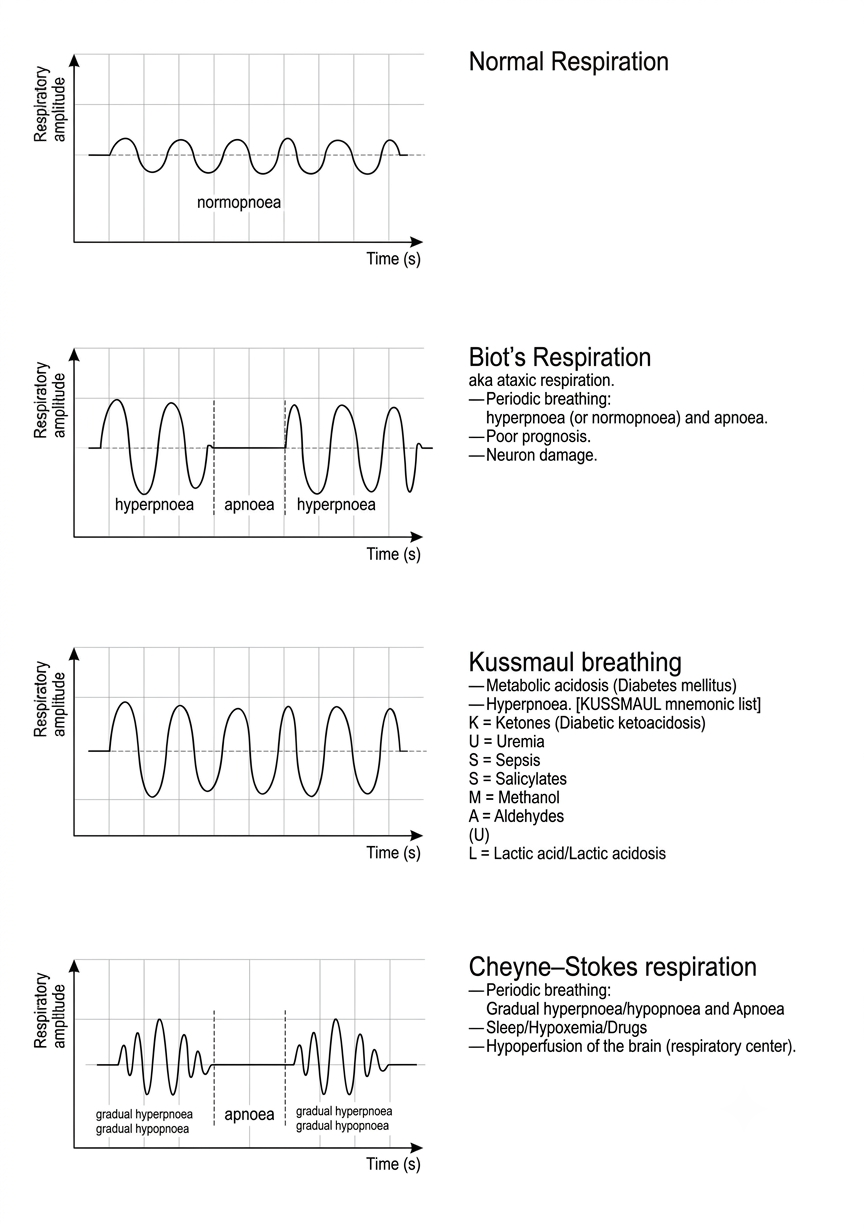
Cheyne-Stokes breathing features an oscillating pattern of deep breathing followed by distinct pauses (apnea) Source: Wikipedia
The 3 Distinct Patterns of Active Dying Breathing
1. Cheyne-Stokes Respiration (The Cycle)
This is the most common pattern seen in the final days and hours. As shown in the diagram above, it is a rhythmic loop that looks like this:
- Breathing starts very shallow, gradually getting deeper and faster.
- It reaches a peak, then gradually slows down and gets shallow again.
- It finishes with a period of apnea a total pause in breathing that can last anywhere from 5 to 30 seconds (sometimes even longer) before the cycle starts again.
Why it happens: The brain stem is experiencing decreased blood flow and is over-correcting for changing levels of carbon dioxide in the blood. They are completely peaceful during these pauses.
2. The Congested “Death Rattle” (The Fluid buildup)
This is the sound that panics families the most. It sounds like a wet, gurgling, or rattling breath.
- The Reality: It is simply a tiny amount of saliva or secretions resting on the back of the throat or the vocal cords.
- Because the person is in a deep, coma-like sleep, they lose their natural reflex to cough or clear their throat. Air moving past this fluid causes the rattle. Clinical observations show the patient does not feel like they are choking or drowning.
3. Agonal Breathing (The Final Shift)
In the final hours or minutes, breathing can become very slow, irregular, and look like gasping.
- You may see their mouth open wide or their head move slightly with each breath. This is a brainstem reflex, not a struggle for air. The intervals between these breaths will stretch out wider and wider until they stop completely.
How to Manage the Symptoms (Without Panicking)
When these changes occur, trying to force oxygen or suctioning the fluid out usually makes things worse. Instead, hospice teams use clinical comfort measures to ease the environment:
- Repositioning: Gently turn the patient onto their side. This allows gravity to naturally move fluids away from the back of the throat, which often silences the rattling sound instantly.
- Medication: Hospice nurses use specific medications (like sublingual atropine drops or scopolamine patches) to dry up the secretions and eliminate the rattling sound. Morphine or low-dose alternatives are also utilized to completely eliminate any internal sensation of breathlessness.
- Environmental Adjustments: Keep a cool mist humidifier in the room, gently moisten their lips and mouth with a damp swab, and talk to them in a calm, soothing voice. Hearing is the absolute last sense to go.
What to remember: This is a natural, expected part of the body’s transition. They are not in pain. Your presence, touch, and voice are the most powerful comfort tools you have right now.